
Daniel Runde, SVP, Thomas Bryja, Program Manager and Research Associate, and Meredith Broadbent, Senior Advisor, from the Center for Strategic & International Studies (CSIS) recently published a report looking at how the four-year lapse of the Generalized System of Preferences (GSP) program allowed China to grow its political and economic influence in South America. CSIS reinforces that it is important to reauthorize GSP as soon as possible.
According to Retooling U.S. Trade to Meet the China Challenge: GSP Matters,
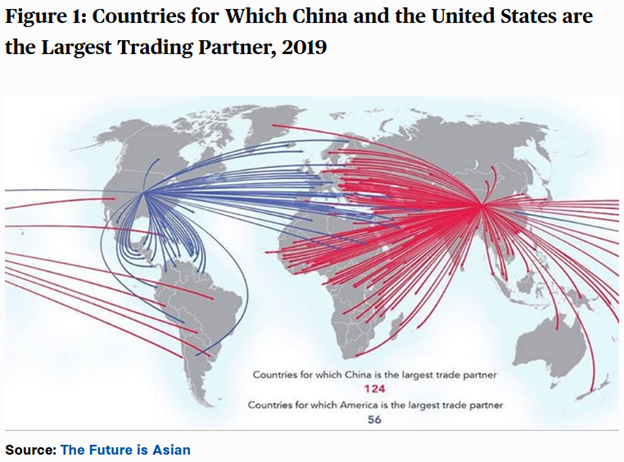
The cessation of GSP came at a time when China assumed a prominent position as the leading trading partner to over 120 developing countries (see Figure 1). As the United States works to retool its trade regime to respond to China’s aggressive posture, it must offer developing countries other options. The renewal of GSP is a necessary step in this direction, holding the potential to rebuild strong relations with emerging economies. While there is increasing momentum in Congress toward reinstating GSP, the process has been lumbered by debates over various amendments. Reauthorizing GSP by 2025 is a prerequisite for the United States to push back against China’s development offensive financed through its Belt and Road Initiative (BRI). ...
As Washington delays renewing GSP, China is steadily building its economic and political sway over developing countries. Since 2013, BRI has reinforced Chinese strategy by facilitating the investment of over $1 trillion in infrastructure projects in more than 140 countries. Since GSP’s expiration, nine additional countries have signed onto BRI, of which three are former GSP beneficiary countries. This is part of a larger trend of China promoting bilateral trade expansion through infrastructure investments in developing countries where U.S. presence has declined.
The authors urge Congress to renew GSP with a retroactive clause, consider broadening GSP, balance the costs and benefits of GSP by packaging it with other legislation, and engage the Global South in order to effectively counter China’s influence:
- Adopt a Retroactive Clause: Maintaining investor confidence in GSP will require the implementation of a retroactive refund clause to reimburse the duties paid on GSP-eligible products during the expiration period. Historically, GSP has always been renewed with retroactive effect to maintain continuous coverage and investor confidence in the GSP program.
- Consider Broadening GSP: Policymakers should consider giving authority to the President of the United States to designate additional products for duty-free treatment in targeted areas where there is an overreliance on China. Diversifying U.S. supply chains out of China to GSP beneficiaries would help grow markets in developing countries and improve the overall resilience of supply chains. Broadening eligible sectors could strengthen USTR’s leverage to seek reforms since the program would be a more valuable incentive for participation. The expansion process should include guardrails to target categories where China has historically dominated and avoid politically sensitive categories with existing supply chains in the Western Hemisphere. This would involve improving the coordination between USTR and development agencies.
- Balance the Costs and Benefits of Packaging GSP with Other Legislation: GSP could be packaged alongside other trade bills, such as the African Growth and Opportunity Act (AGOA) and Haiti HOPE/HELP programs, where there is a tangible, practical need for renewal that would force action before the lapse of this important strategic toolkit. On the other hand, previous efforts to force a tandem reauthorization of TAA have delayed the renewal of GSP, driving small and medium businesses in the United States to pay immense tariffs, institute layoffs, or face closure. Further setbacks to the reauthorization of GSP will leave more Americans without jobs.
- Engage the Global South: Deeper engagement with the Global South would enable the United States to hear more about how programs like GSP have benefited and could benefit developing countries and the United States alike. Asian and Latin American embassies are eager for an attentive ear from the United States on how to build more strategic economic partnerships.