
Brian Riley, Director of the National Taxpayers Union’s Free Trade Initiative, published an article examining the current trend of “continu[ing] to embrace policies that inflate prices.” The article highlights the fact that low-cost furniture and apparel imports from China allowed the U.S. to add higher paying jobs and invest in the economy. Riley takes a recent North Carolina furniture industry example that Trump used in an interview with Dave Ramsey.
Riley finds that the price of furniture fell by 24% between 1998 and 2018 when adjusted for inflation, compared to overall U.S. prices during that same time period, and the U.S. added 924,130 new jobs for registered nurses between 1998 and 2018, which pays 76% more than the 805,560 lost apparel and manufacturing jobs.
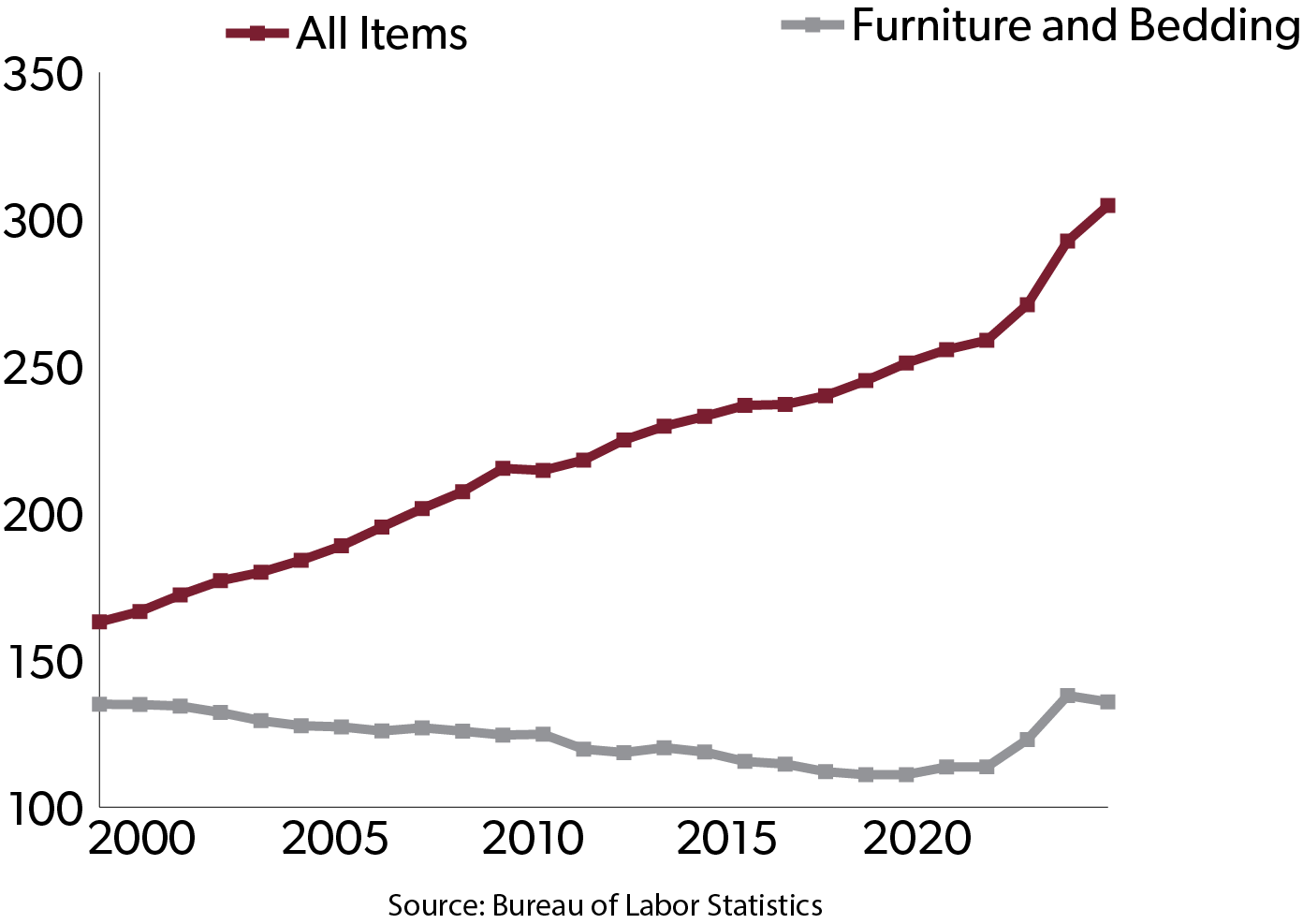
Riley also scorned the recent Biden Administration attempts to stop the flow of de minimis clothing imports from China, categorizing them as a “tax hike… which may provide some benefit to the 0.03 percent of Americans who work in apparel manufacturing, but only at the expense of higher prices for low-income households.”
While the job losses resulting from affordable clothing and furniture imports are apparent, many people overlook the new jobs such imports enable our economy to create.
Instead of trying to bring back low-wage jobs by imposing protectionist import taxes, as President Biden and former President Trump have done, the government should instead reduce barriers to affordable furniture and clothing. This would benefit the 99.86 percent of Americans who do not work in those industries and who have seen their buying power reduced by inflation, and it would unleash the economic growth needed to create new, higher-paying jobs for American workers.