Warwick McKibbin, Megan Hogan, and Marcus Noland with the Peterson Institute for International Economics (PIIE) released a new working paper today, The International Economic Implications of a Second Trump Presidency, as part of PIIE’s Election 2024 presidential economic platform assessment project. The working paper examines Trump’s proposed policy measures of “the deportation of millions of people from the United States, steeper tariffs, and the erosion of the Federal Reserve’s political independence.”
We find that these steps would result in lower US national income, lower employment, and higher inflation than otherwise. In some cases, economic conditions recover over time, but in others the damage continues through 2040.
And despite Trump’s “America first” rhetoric, these policies would harm the US economy more than any other in the world, particularly trade-exposed sectors such as manufacturing and agriculture. In some cases, other countries would enjoy stronger economic growth than otherwise after receiving inflows of capital leaving the United States.
They also examine two scenarios in which both the 10% and 60% tariff increases are enacted: one in which foreign countries do not retaliate and one where they do.
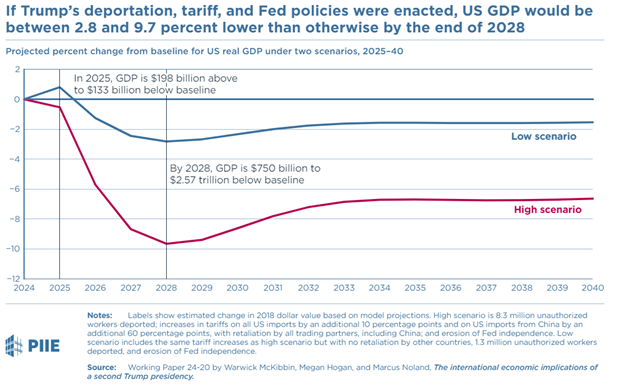
Both of Trump’s tariff plans we examined—imposing 10 percentage point additional tariffs on US imports from all sources and 60 percentage point additional tariffs on imports from China—reduce US real GDP and employment by 2028. But the former proposal hurts the US economy more than the latter. The damage is magnified if other countries retaliate with higher tariffs on their imports from the United States.”
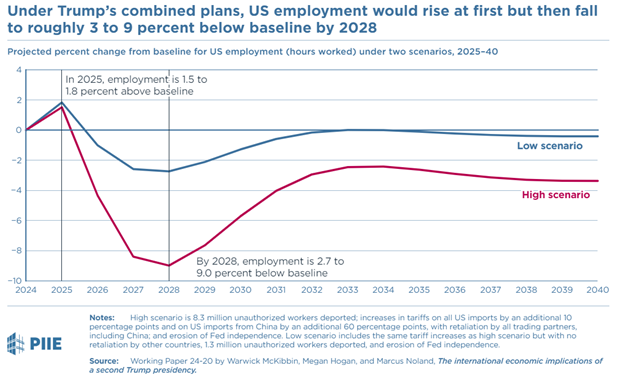
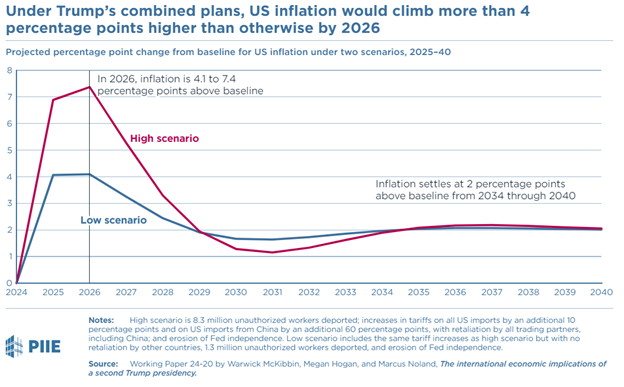
“Both of these scenarios cause a large inflationary impulse and significant declines in US employment, particularly in durable manufacturing and agriculture. They differ mainly by the magnitude of damage inflicted on households, firms, and the overall economy.
The figures below show the impact on the U.S. GDP, employment, and inflation.