
When the United States Fashion Industry Association (USFIA) was founded 25 years ago, “ethical sourcing” wasn’t in our vocabulary. Today, however, it’s one of the most important elements of the association’s mission, and of course, the way fashion brands, retailers, and importers absolutely must do business.
From Bangladesh to Cambodia to conflict minerals, the ethical sourcing issues that brands and retailers must pay attention to change nearly every day. How can your company stay on top of the issues—and most importantly, how can you ensure that you’re sourcing in an ethical way?
During SOURCING at MAGIC in Las Vegas earlier this month, USFIA President Julia K. Hughes moderated a panel called “Ethical Sourcing 2.0: What’s Next?” with Clay Hickson, Senior Director of Strategy and Business Development for Worldwide Responsible Accredited Production (WRAP), and Edward Hertzman, Publisher of the Sourcing Journal. These experts, who have significant experience on the ground in countries with ethical sourcing challenges, provided unique perspectives on the issue—and some fresh insight on how brands and retailers can directly influence compliance.
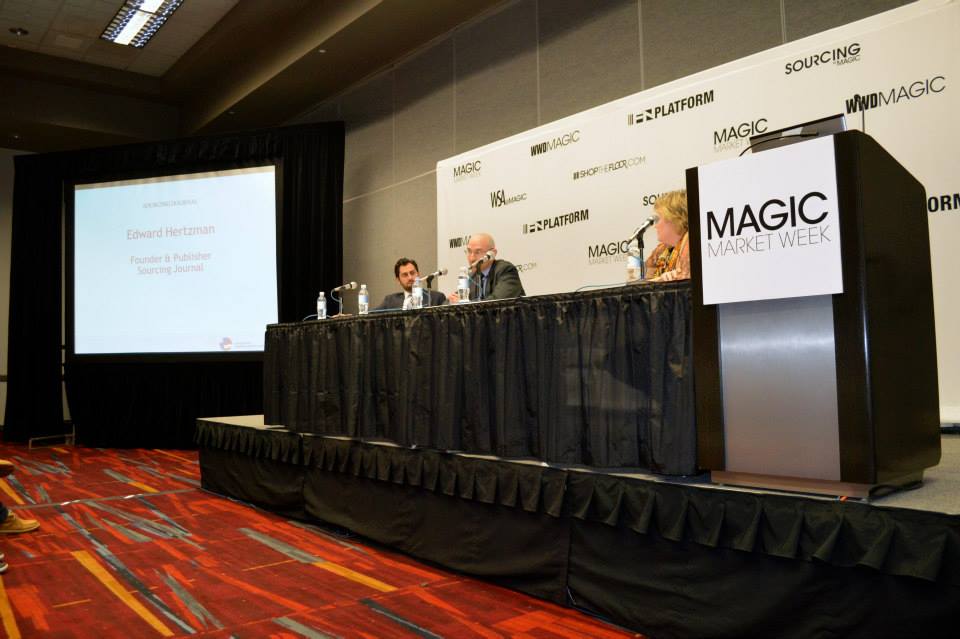
USFIA President Julia K. Hughes moderates a panel discussion with Edward Hertzman of Sourcing Journal (left) and Clay Hickson of WRAP (center). (Credit: USFIA)
You are probably familiar with WRAP, a non-profit, certifying body that audits and certifies factories around the globe based on 12 principles. (You can find out more details on WRAP’s specific in a previous OFF THE CUFF article or on WRAP’s recently revamped website.) WRAP was founded in the mid-1990s when social compliance really became an issue for our industry—remember Kathie Lee Gifford’s factory problems?—but the organization continues to expand as social compliance has become non-negotiable in this era of the 24/7 news cycle and social media. Hickson provided high-level tips for brands and retailers to ensure compliance today, based on his experience with the organization.
First, don’t silo your sourcing and compliance operations in different areas of the company. These operations should work closely together, he said.
Second, don’t put so many demands on you suppliers. If companies continue to push on price and delivery time, something might have to budge—and you don’t want it to be compliance. Factories feel pressure to meet clients’ demands for low prices and fast delivery times, which can lead to poor labor conditions, outsourcing, and worse.
Finally, said Hickson, you should put an increased emphasis on training and improvement. For an efficient, profitable supply chain, you need to invest in your suppliers and work with them to get them up to standards. The investment could be specific, like sponsoring a fire safety training workshop, or more broad, like a plan for continuous improvement and engagement of the workers in the process.
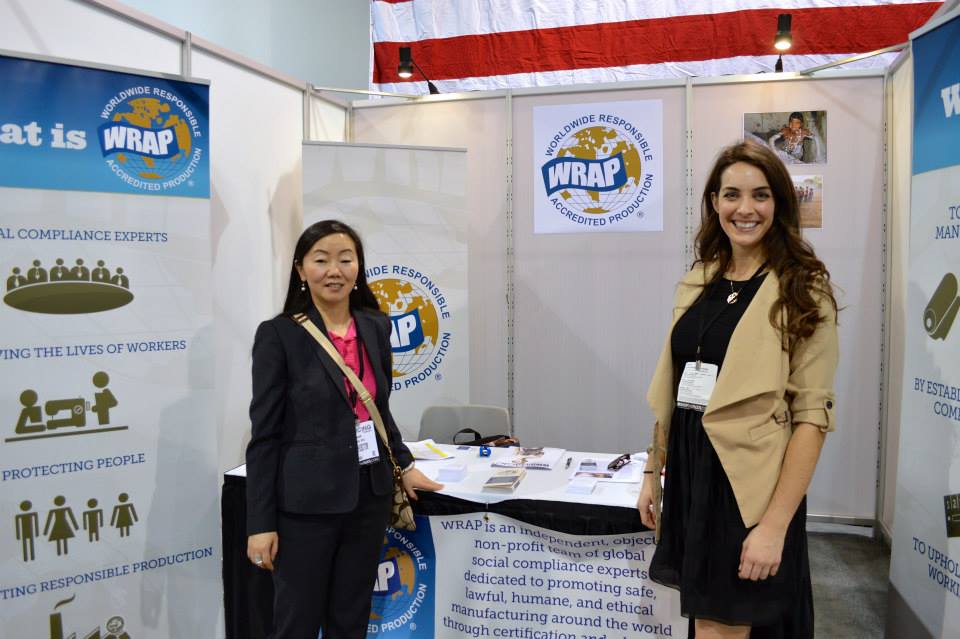
WRAP's Hong Mei and Kelli Hoggle at SOURCING at MAGIC. (Credit: USFIA)
Hertzman noted that we need to “shake up the conversation about ethical sourcing” by distinguishing between “ethics” and “compliance” in business operations. He echoed Hickson that brands’ and retailers’ demands on factories can lead to compliance issues. Wages, energy costs, land costs, and transportation costs continue to rise, but brands and retailers continue to ask for cheaper prices. Add in additional pressures like last-minute changes to the tech packs and speeding up delivery times to get an order in the store while it’s still hot, and compliance can become difficult, to say the least.
Hughes asked the panelists for the number one thing companies can do today to ensure ethical sourcing. Hickson said you should evaluate your program today and see if it’s doing what it’s supposed to do. Hertzman suggested that you travel and see what’s really happening on the ground, because it’s the only way you can see what needs to change.
For more photos, visit our Facebook page!
And stay tuned for coverage of the SOURCING at MAGIC seminar on intellectual property protection in China, featuring experts from Squire Sanders, in the next issue!